

Listen to this article
Empathy is the ability to understand another person’s feelings and point of view without rushing to judge, correct, or dismiss them. It is not a technique for a job interview. It is a life skill that helps us build stronger relationships, respond with kindness, and live more peacefully with people who do not think exactly as we do.
Without empathy, we hear only words. With empathy, we begin to notice the story, pain, hope, or fear behind those words. This guide explains the main types of empathy, the habits that block it, and simple ways to develop it in everyday life.
Why Developing Empathy Matters
Imagine speaking while you are distressed and realizing that the other person is not truly listening. They may be preparing advice, defending themselves, or waiting for their turn to talk. The experience can feel lonely even when someone is sitting beside you.
Empathy changes that interaction. It helps us ask, “What may this person be going through?” rather than immediately asking, “How do I prove my point?” This shift can improve relationships, emotional intelligence, and peace of mind.
Empathy in relationships
Healthy relationships need a safe space where both people can express themselves. Listening without immediate judgment allows us to understand where a partner, friend, colleague, or family member is coming from. We may still disagree, but understanding lowers unnecessary conflict and creates mutual respect.
Empathy in society
Many conflicts grow because people treat different views, cultures, or identities as threats. Empathy does not require us to approve of every belief or action. It asks us to see another person as human and to understand the experiences that shaped their perspective. That understanding can bridge divisions that arguments alone cannot repair.
Empathy and personal growth
Understanding other people’s emotions gives us a broader view of human behaviour. It strengthens emotional intelligence and helps us communicate with greater care. Better interactions support better relationships, and they often leave us with more peace at the end of the day.
Three Types of Empathy
1. Cognitive empathy
Cognitive empathy means understanding another person’s point of view. Instead of preparing an answer while they speak, we try to follow their thought process. We mentally step into their situation and ask what the experience may mean to them.
2. Emotional empathy
Emotional empathy is our ability to connect with what another person feels. We may recognize their fear, sadness, relief, or joy because we can imagine the emotional journey behind it. This is similar to feeling moved by a character in a film, but it takes place in a real human relationship.
3. Compassionate empathy
Compassionate empathy goes beyond understanding. It awakens kindness and may move us to help. Sometimes help means practical action. At other times, it simply means staying present and listening without trying to take control of the person’s experience.
Empathy and Sympathy Are Not the Same
Sympathy usually means feeling sadness or concern for someone from our own point of view. Empathy asks us to understand the situation from their point of view. Sympathy may say, “I feel sorry that this happened to you.” Empathy asks, “What is this experience like for you, and what do you need from me right now?”
The distinction is important because pity can create distance, while empathy creates connection. A person in pain may not need advice or a solution. They may first need their feelings to be heard and respected.
What Blocks Empathy?
Cultural and personal bias
Every person is shaped by family, society, culture, and experience. Problems begin when we treat our own viewpoint as unquestionable fact and refuse to hear another perspective. Bias can desensitize us to racism, classism, and other forms of injustice.
Emotional overload
When our own mind is overwhelmed, it can be difficult to make room for another person’s feelings. Rest, emotional regulation, and clear boundaries help us stay caring without becoming exhausted.
Limited life experience
We may find an experience difficult to understand because we have never faced anything similar. We do not need identical experiences to show empathy. We can stay curious, ask respectful questions, and accept that another person’s reality may be different from ours.
Dehumanization
When a group or individual is reduced to a label, it becomes easier to judge them without considering their circumstances. Empathy asks us to look beyond inherited assumptions and remember the human being behind the label.
A self-centred lifestyle
If we focus only on our own needs, we gradually lose the habit of noticing others. Our concerns matter, but they are not the only concerns in the room. Making space for another person strengthens rather than diminishes us.
Poor listening
Poor listening is one of the most common barriers to empathy. Sometimes people do not want a lesson. They want someone who will listen, recognize their feelings, and allow them to speak without judgment.
How to Develop Empathy in Daily Life
1. Practise active listening
Give the speaker your attention. Do not interrupt or prepare a reply while they are still talking. Notice both their words and the feelings behind them. When they finish, summarize what you understood or ask a gentle question to check that you heard correctly.
2. Consider the other perspective
Ask why the person may feel this way and how you might react in similar circumstances. Avoid assuming that you would handle everything better. Perspective-taking is a reality check that can make us kinder and less certain of quick judgments.
3. Practise mindfulness
Mindfulness helps us notice our own emotions, assumptions, and reactions. A clearer mind can listen without immediately being pulled into defensiveness. Meditation also trains attention, which is essential when we want to remain present in a conversation.
If you are beginning a practice, these guides may help: Morning Meditation for Beginners, Benefits of Meditation, and How to Meditate for Better Focus.
4. Seek diverse experiences
Read books from different cultures, watch thoughtful documentaries, travel when possible, and learn about lives unlike your own. The wider our learning horizon becomes, the less likely we are to mistake familiarity for truth.
5. Ask thoughtful questions
Open questions help people express what matters to them. Try: “How did that affect you?” “What was the hardest part?” or “Would you like me to listen, or would advice be helpful?” Ask with genuine interest, not as an interrogation.
6. Reflect after important conversations
Take a moment to ask what you learned, where you became defensive, and whether the other person seemed heard. Reflection turns one conversation into a lesson for the next.
7. Notice emotional cues
Pay attention to tone, pace, expression, and pauses. These cues do not give us permission to assume what someone feels, but they can remind us to slow down and ask with care.
A Simple Empathy Practice
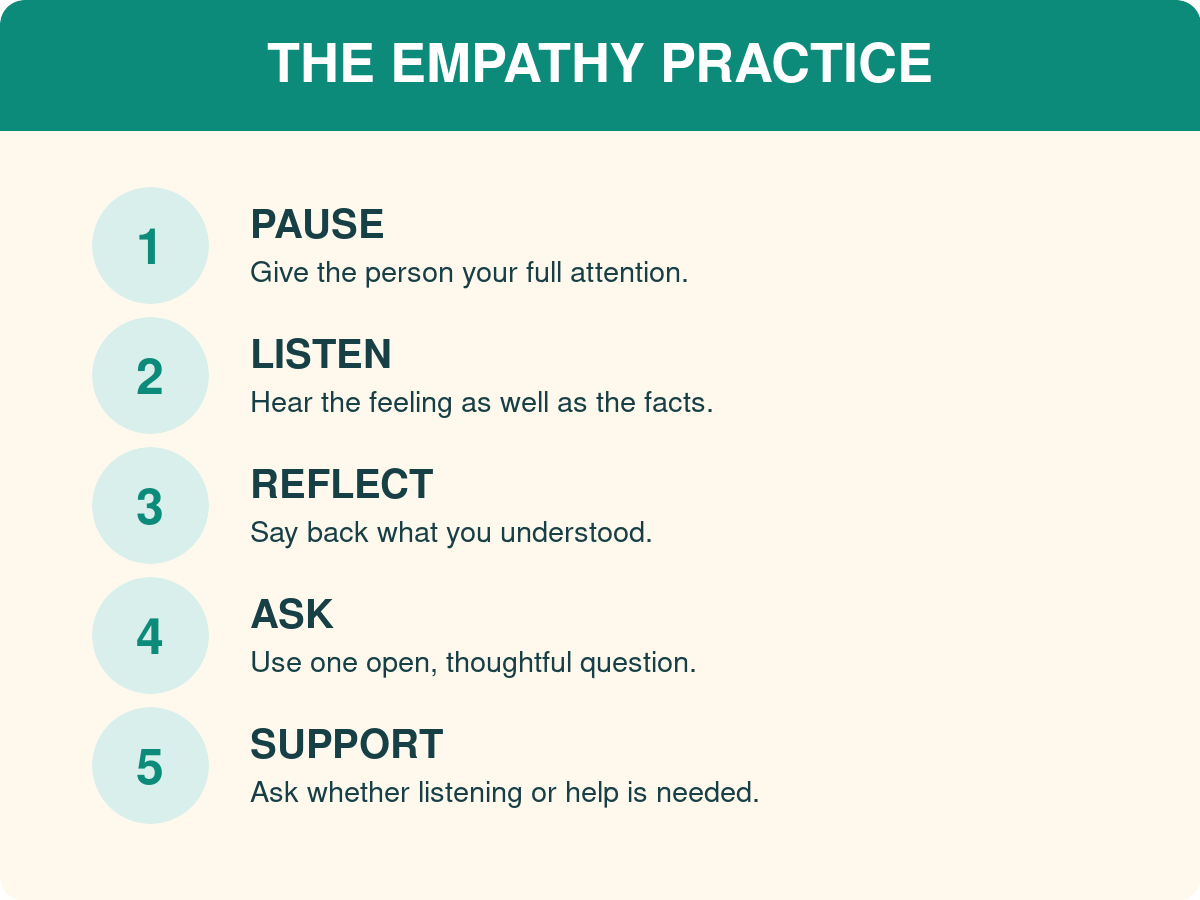
In your next meaningful conversation, try this short process:
- Pause and give the person your full attention.
- Listen for the feeling as well as the facts.
- Reflect back what you understood.
- Ask one open question.
- Find out whether the person wants listening, support, or practical help.
Empathy grows through repeated practice. We do not become perfectly understanding overnight. We become more patient, more curious, and more willing to see beyond ourselves.
Final Thoughts
Empathy is a bridge between people. It helps relationships become stronger, makes disagreements more humane, and encourages compassion in daily life. The aim is not to abandon our own perspective. It is to make enough space to understand someone else’s.
“I think we all have empathy. We may not have enough courage to display it.” – Maya Angelou
Be kind to yourself and to others. Listen before judging, stay curious, and let understanding guide your response.
