
Kriya Yoga often sounds mysterious when you first meet the term. Some people describe it as meditation, others as a complete spiritual path, and online explanations can quickly become confusing. The simplest place to begin is this: Kriya Yoga is a disciplined approach to inner awareness that brings together mindful action, breath, concentration, and meditation.
This guide explains the idea in clear language, shows how it fits within the wider yoga tradition, and helps beginners take safe first steps without rushing into advanced techniques.
What Does Kriya Yoga Mean?
The Sanskrit word kriya can mean action, practice, or a purposeful method. In yoga, the name is used in more than one way. It can refer broadly to disciplined practices that prepare the body and mind, and it can also refer to specific meditation traditions taught through a teacher and lineage.
That is why two books may explain Kriya Yoga differently. They may be describing different parts of a large tradition rather than contradicting each other.
Kriya Yoga in the Eight-Limbed Path
In the Yoga Sutras, Kriya Yoga is associated with three steady qualities:
- Tapas: consistent effort and self-discipline.
- Svadhyaya: self-study and reflection on helpful teachings.
- Ishvara pranidhana: humility and letting go of the need to control every result.
Together, these ideas make yoga part of daily life. Practice is no longer only something that happens on a mat. It also appears in how patiently you work, how honestly you observe yourself, and how lightly you hold the outcome.
How Is Kriya Yoga Different From Hatha Yoga?
Hatha Yoga classes commonly begin with the body through postures, mobility, relaxation, and breath awareness. Kriya Yoga places more emphasis on inner discipline and meditation. The two are not rivals. A steady physical practice can make sitting and breathing more comfortable, while meditation can bring greater attention to movement.
India’s official yoga guidance commonly presents a gradual sequence: preparatory or cleansing practices, postures, breath regulation, and then meditation. For a beginner, the important lesson is not to hurry. Build a stable base before attempting advanced breath retention, forceful cleansing, or intensive meditation.
A Safe Beginner Routine
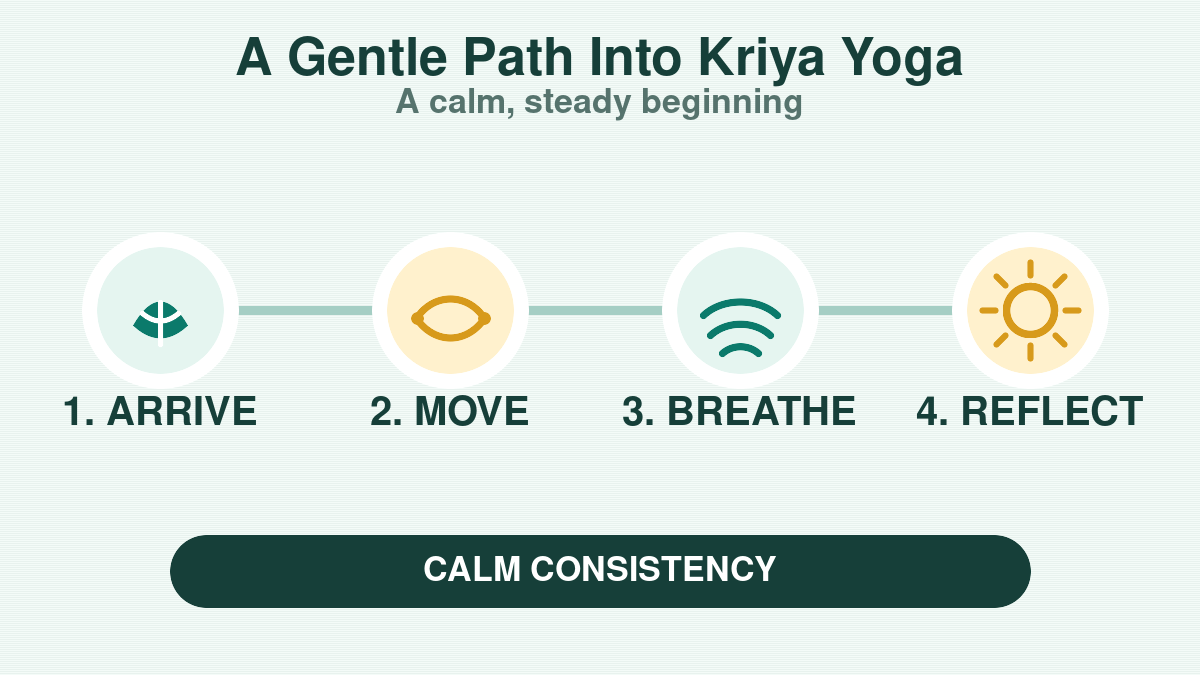
You do not need to attempt a secret or advanced technique to begin living the principles of Kriya Yoga. Try this gentle 10-minute routine:
- Arrive for one minute. Sit comfortably and notice how your body feels.
- Move gently for three minutes. Roll the shoulders and make slow, comfortable movements without forcing a stretch.
- Watch the natural breath for three minutes. Do not hold or control it. Simply notice each inhale and exhale.
- Choose one intention for two minutes. Ask what patient, useful action matters today.
- Close with one quiet minute. Let the practice settle before returning to your day.
If sitting on the floor is uncomfortable, use a chair. Stop if you feel dizzy, strained, short of breath, or unwell.
What Beginners Should Avoid
- Do not copy advanced breath retention or forceful cleansing practices from a short video.
- Do not treat discomfort as proof that a technique is working.
- Do not chase dramatic experiences. Regular, calm practice matters more.
- Do not use yoga as a substitute for medical care.
People who are pregnant or managing breathing, heart, blood-pressure, neurological, eye, or other health concerns should ask a qualified health professional and an experienced yoga teacher before trying intensive breathwork or cleansing practices.
How to Choose a Kriya Yoga Teacher
A trustworthy teacher explains what a practice is for, offers easier options, respects health limits, and never pressures you to ignore pain. It is reasonable to ask about training, lineage, class structure, and how beginners are supported. Be careful with anyone who guarantees healing, instant awakening, or extraordinary powers.
Continue Learning
For a broader overview, visit our free yoga and meditation PDF library, where you can find both introductory and detailed Kriya Yoga downloads. If you want to strengthen the basics first, explore the Fundamental Yoga Course.
Frequently Asked Questions
Can a complete beginner practise Kriya Yoga?
A beginner can start with its foundations: regular practice, self-reflection, gentle movement, natural breath awareness, and meditation. Learn advanced techniques directly from a qualified teacher.
Is Kriya Yoga a religion?
Kriya Yoga comes from India’s spiritual and philosophical traditions, but people approach it in different ways. Some practise it devotionally, while others focus on meditation and self-discipline.
How long should I practise?
Ten calm minutes practised regularly can be a better beginning than a long, intense session that you cannot sustain. Increase the time gradually as comfort and guidance allow.

